
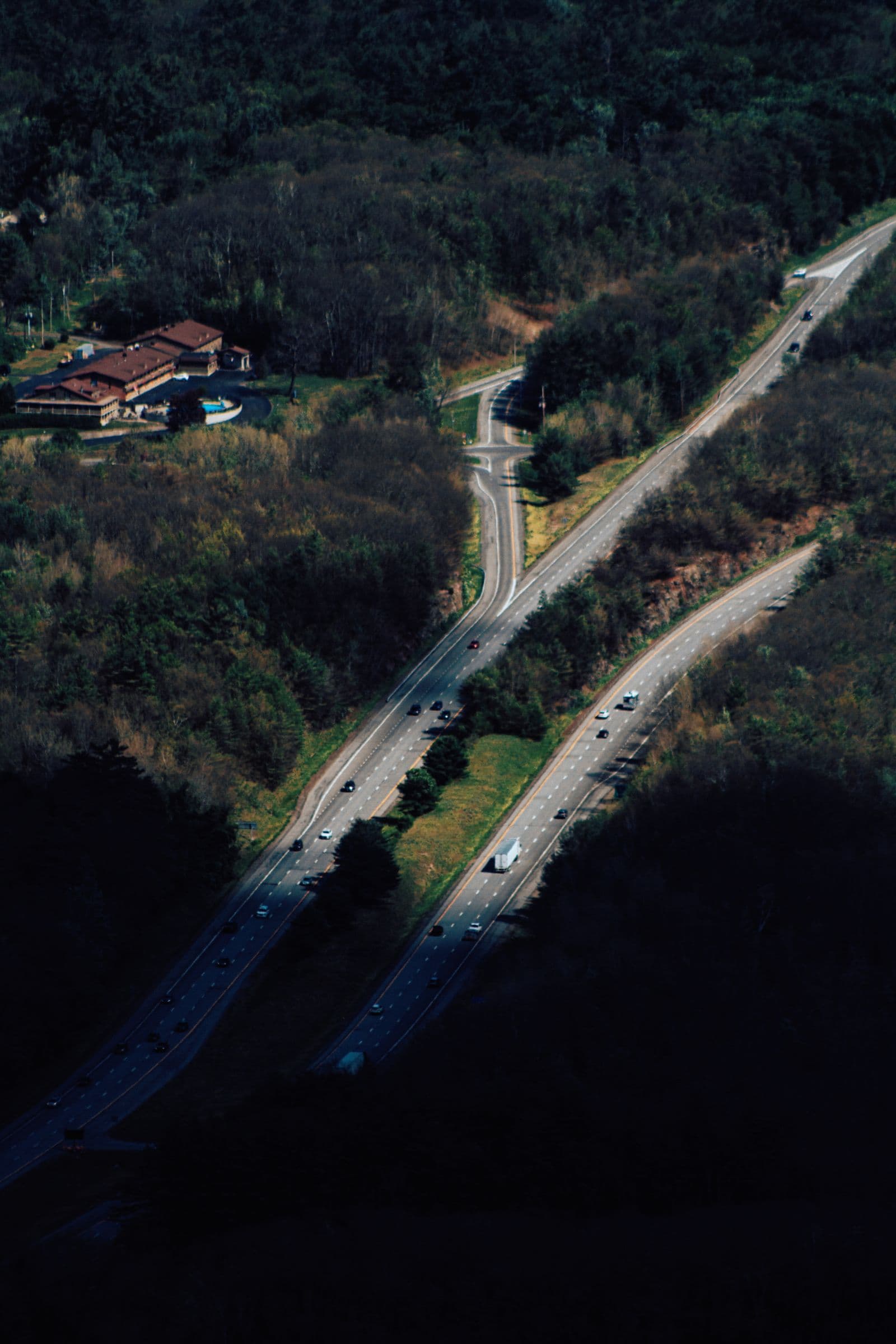
This explainer is for procurement officers, owner's engineers and developers who need to understand what sits behind a highway contractor's programme — and where schedules are genuinely won or lost. The short version: a national highway is a factory laid out along a corridor, and the sequence below is its production line.
Before construction: DPR, right of way and the appointed date
Every corridor begins with a detailed project report (DPR): traffic studies, alignment selection, geotechnical investigation and preliminary design. On EPC packages the DPR becomes the basis of the employer's requirements, with the contractor developing the detailed design to MoRTH Specifications for Road & Bridge Works and the relevant IRC codes.
Construction cannot start meaningfully until the right of way is available. Land acquisition, utility shifting and tree cutting are owner-side obligations, and the contract's appointed date is declared only when the corridor is substantially encumbrance-free. Programmes that ignore this reality fail at month one.
Earthwork and subgrade — the unglamorous critical path
Embankment and subgrade construction (MoRTH Section 300) is usually the largest single quantity on the project and the most weather-exposed. The work cycles through borrow-area approval, layer-by-layer placement, and compaction to specified dry density, verified by field density testing. Subgrade quality is measured by CBR; everything above it is designed assuming that value is real.
Drainage first
Cross-drainage structures — pipe and box culverts — and roadside drains are advanced early. A pavement built on a poorly drained formation fails regardless of how well its upper layers are built.
The pavement stack
For a flexible pavement designed to IRC:37, layers go down in strict order:
- Granular sub-base (GSB) — the drainage and platform layer.
- Wet mix macadam (WMM) — the compacted granular base.
- Dense bituminous macadam (DBM) — the bituminous binder course.
- Bituminous concrete (BC) — the wearing course, laid with paver and compacted within a tight temperature window; binders conform to IS 73, with modified bitumen to IS 15462 where the design calls for it.
For a rigid pavement designed to IRC:58, a dry lean concrete (DLC) base is topped by pavement quality concrete (PQC), laid by fixed-form or slip-form paver with sawn joints and dowel/tie bars. Rigid pavements are increasingly specified for heavily trafficked corridors and toll plaza approaches.
Structures, safety furniture and systems
Bridges, flyovers, vehicular and pedestrian underpasses proceed in parallel streams — foundations, substructure, and superstructure by cast-in-situ or precast girder methods. The corridor is finished with the elements road users actually experience: crash barriers, signage, markings and lighting per the IRC safety-series codes, plus toll plazas and ITS ducting where the concession requires them.
Quality control — the 900-series discipline
MoRTH Section 900 defines the sampling and testing regime: gradation, Atterberg limits, density, bitumen content, core thickness, concrete strength. A competent contractor runs a site laboratory and treats the QC records as deliverables in their own right — they are what the authority engineer certifies payment against.
Procurement note: when comparing bids, ask how the contractor will sequence earthwork monsoon-to-monsoon and where the plant (crusher, WMM plant, hot-mix plant, pavers) will be located. Those two answers reveal more about schedule credibility than any bar chart.
Where Valis Infra fits: we self-perform the full highway scope — earthwork, pavements, structures and safety systems — as a Roads & Highways EPC contractor.